

While potent corticosteroids are effective for gout flares, their systemic risks warrant exploring targeted therapies that could match their efficacy with a better safety profile. Preclinical data from a rat model of acute arthritis indicate that a novel, intra-articular slow-release formulation of colchicine exhibits efficacy comparable to that of dexamethasone.
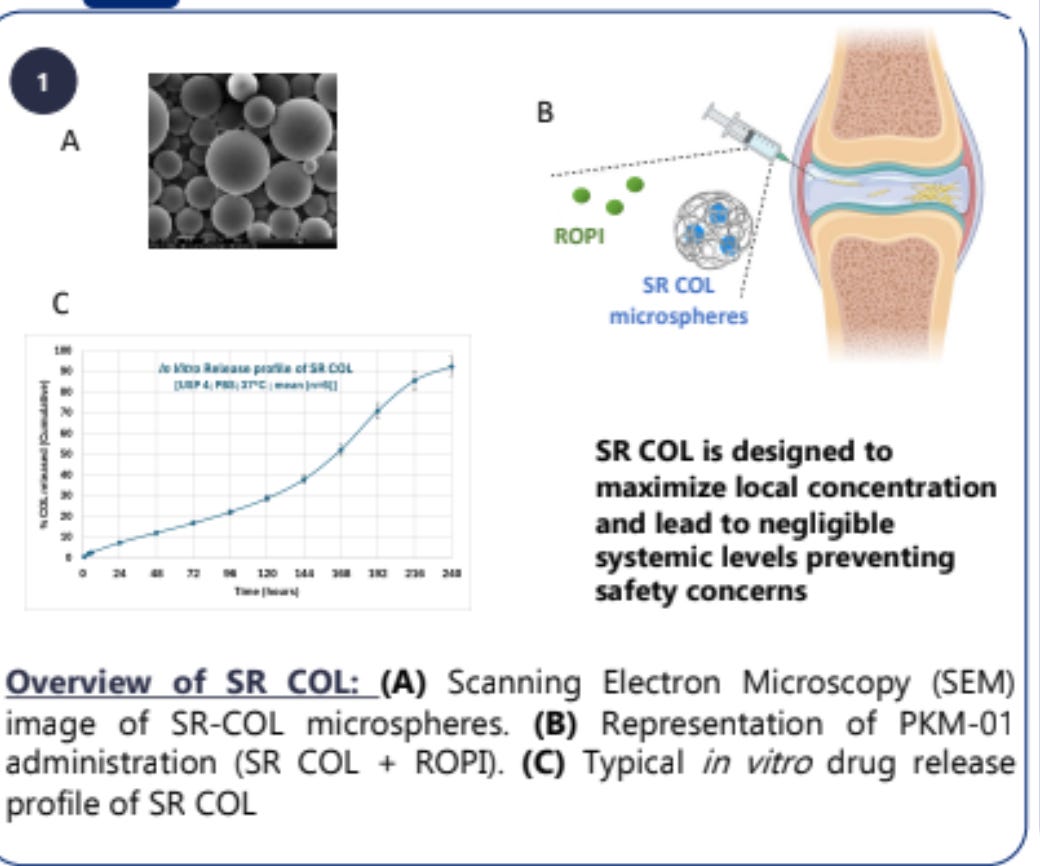
The study, sponsored and performed by PK MED, a French biotech company, utilized a carrageenan-induced acute arthritis model in rats. The test group received an intra-articular injection of slow-release colchicine encapsulated in biodegradable PLGA microspheres (Figure 1), which was then compared with control groups that received either PBS or an intra-articular injection of dexamethasone.
The results from the animal model included:
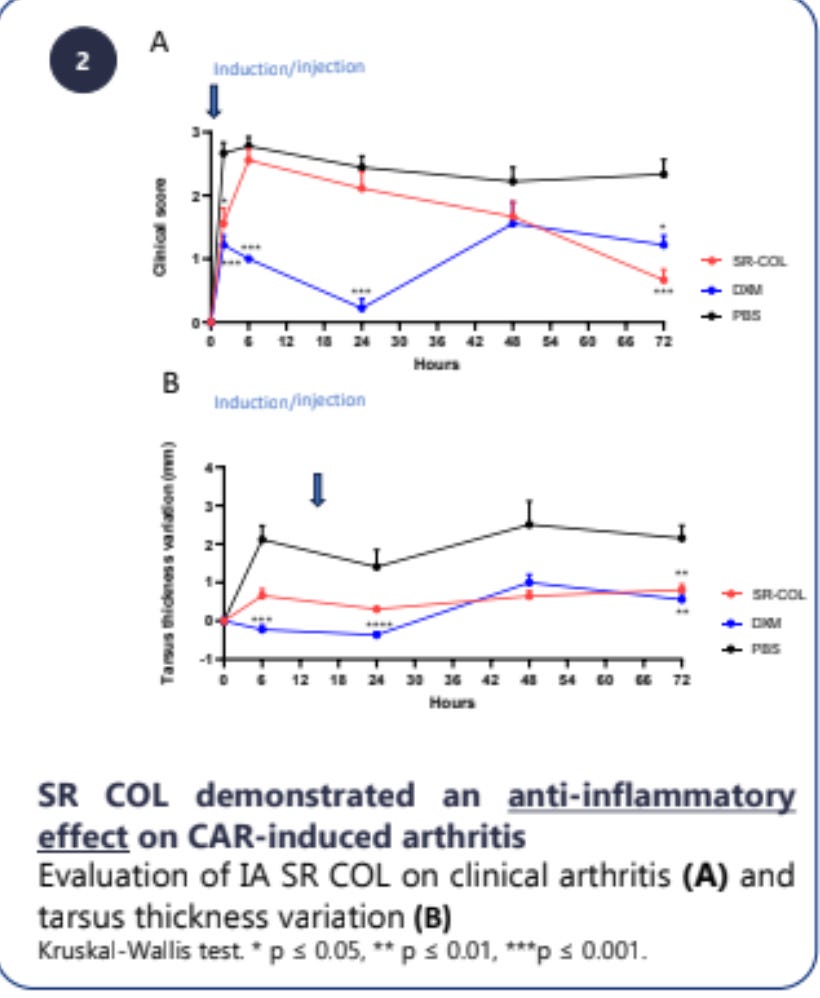
Comparable Efficacy in Inflammation Control and Joint Protection: The study demonstrated that the slow-release colchicine significantly reduced joint inflammation and destruction (Figure 2). Histological analysis confirmed that both inflammation and destruction scores in the treated groups were comparable to those in the dexamethasone group and significantly lower than in the PBS control group.
Rapid Pain Relief: The addition of a local anesthetic to the formulation resulted in a rapid and significant analgesic effect, with pain scores significantly reduced within hours of administration (Figure 3).
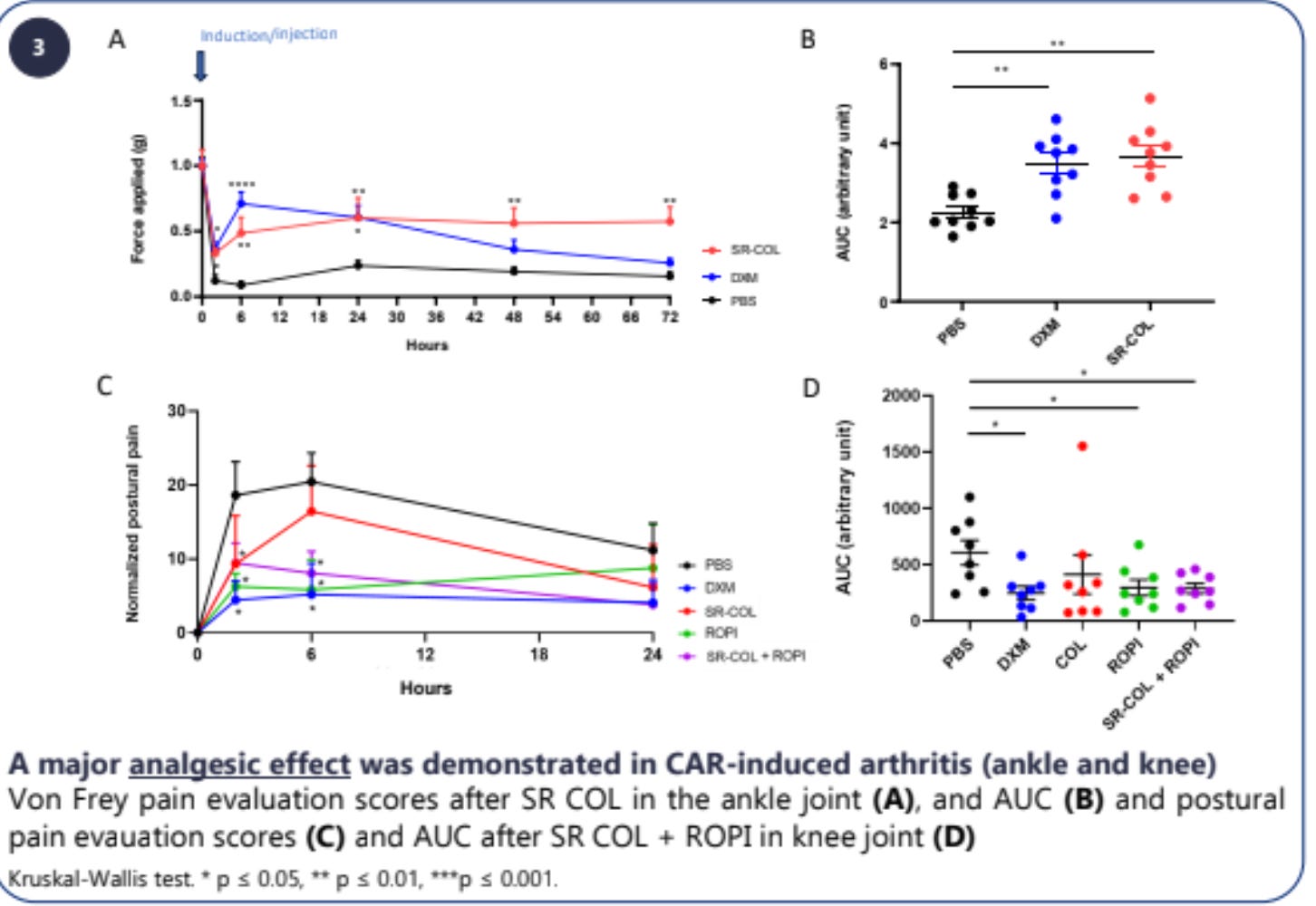
These findings suggest that a local therapy could potentially offer the efficacy of a potent steroid, possibly shifting the risk-benefit analysis for gout flare treatments by separating clinical effect from systemic toxicity. A planned Phase II study will be crucial for understanding if this comparability and potential safety advantage can be replicated in patients.
It is essential to acknowledge that these findings represent preliminary, proof-of-concept data from an animal model. Future studies should aim to compare this intra-articular approach with the standard of care, such as approved dosing regimens for oral colchicine, to clearly define its place in clinical practice.