

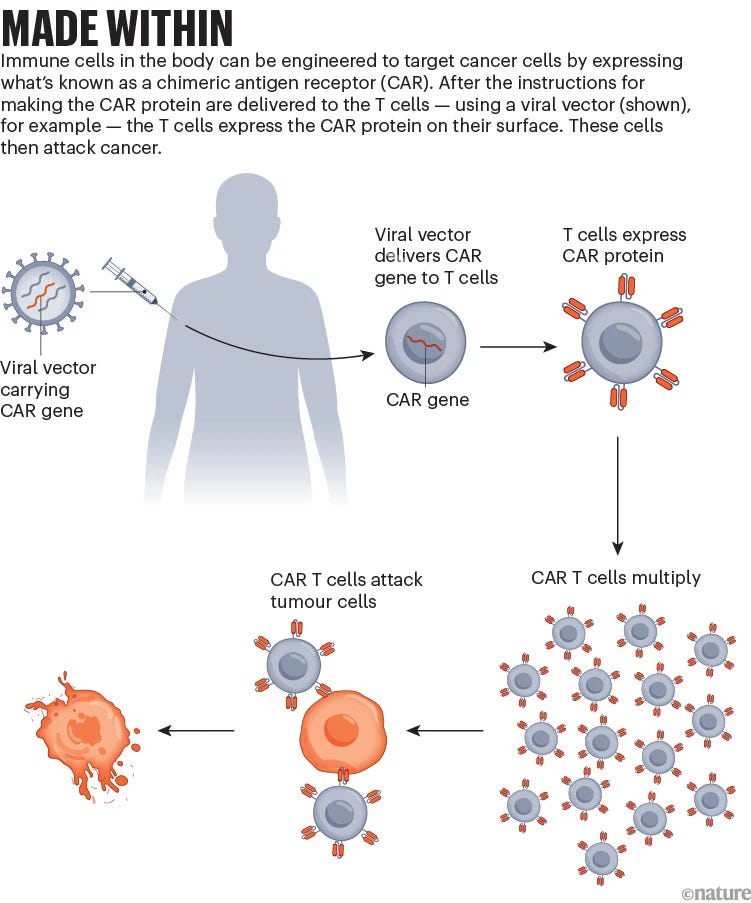
A recent article in Nature titled "Powerful Cancer-Fighting Cells Will Soon Be Cheaper and Quicker to Make" highlights an exciting development in cancer treatment: in vivo CAR-T therapy. This approach aims to bring cell engineering directly into patients, which could help overcome many challenges faced by current treatments.
Pros
In vivo CAR-T therapy has excellent potential. It aims to mitigate the high costs, logistical challenges, and treatment delays associated with existing therapies. This method could offer a ready-to-use solution that is cheaper and more accessible for patients. It utilizes innovative techniques, including lentiviral vectors for sustained effects and RNA/nanoparticles for safer delivery. Additionally, it may open new avenues for treating autoimmune diseases. Early human trials have shown promise, with some positive outcomes, though results are still limited.
Cons
While this progress is exciting, we need to be cautious. The benefits mentioned are mostly theoretical at this point. Here are some essential concerns to consider:
1. **Safety Issues**: In vivo CAR-T therapy still poses risks. For example, Cytokine Release Syndrome (CRS) could occur even with viral vectors. There is also concern about the potential for developing secondary cancers due to lentiviral integration into the genome, which cannot be easily monitored in vivo.
2. **Effectiveness Concerns**: RNA-based therapies may not provide long-lasting effects since they are designed to be temporary. This raises questions about their ability to cure cancer effectively.
3. **Limited Clinical Data**: Human trials are just starting, and while the initial outcomes are encouraging, data is still minimal. Some early patients have not responded to treatment, indicating that a long journey lies ahead.
(Partial Paywall https://lnkd.in/gZ4V-Ghb)