

The haunting, post-apocalyptic world of "The Last of Us" captivated audiences with a terrifying premise: a mutated Ophiocordyceps fungus that transforms human hosts into aggressive, zombie-like creatures. The story begins with the terrifying idea that global warming could allow this real-world "zombie-ant fungus" to adapt to the warmth of the human body, leading to a pandemic. While this makes for brilliant television, the reality of human-fungal interactions is far more complex and, thankfully, far less apocalyptic.
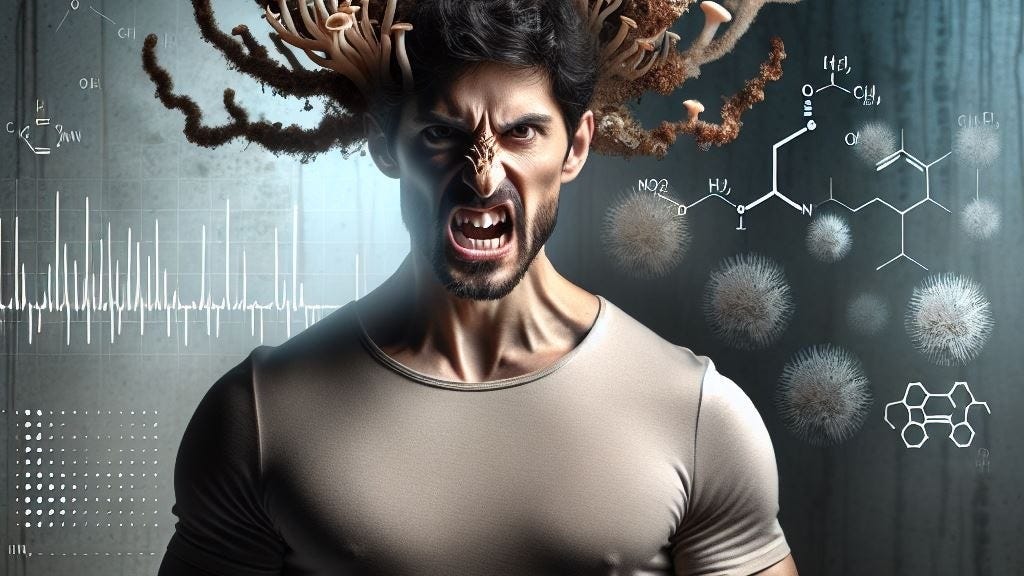
A representation of the Cordyceps infected man from the HBO serial Last of US
Fungi are ancient and everywhere; they diverged from animals about 1.5 billion years ago and are a constant presence in our environment. The good news is that our bodies have evolved sophisticated defenses against them. The very thing the show used as a plot device—our warm body temperature—is a primary barrier against most fungi. But beyond that, we possess a powerful, multi-layered immune system that is highly adept at recognizing and eliminating fungal threats.
Our Inner Bodyguards: The Human Immune Response to Fungi
The threat of fungal diseases is real and increasing globally, driven by factors like medical advancements that suppress the immune system and the emergence of drug-resistant strains. However, our bodies are not defenseless. As detailed in a recent review in the Journal of Experimental Medicine, our immune system has a playbook for dealing with these invaders.
When you inhale a fungal spore, like Aspergillus, specialized immune cells in your lungs called alveolar macrophages act as the first line of defense, consuming the spores. If any spores manage to germinate and grow, a second wave of defenders, neutrophils, are recruited to the site to attack the growing fungal filaments.
For other types of fungi, such as the yeasts Candida and Cryptococcus or thermally dimorphic fungi (TDFs) that live as molds in the environment but turn into yeasts at body temperature, a different strategy is employed. These fungi can sometimes survive inside macrophages. To overcome this, the immune system initiates a coordinated response called the macrophage-IFN-γ-T cell axis. In this process, specialized white blood cells (T cells) produce a powerful signaling molecule called interferon-gamma (IFN-γ), which "activates" the macrophages, turning them into potent fungus-killing machines.
For fungal infections on our skin and mucous membranes, such as those caused by Candida, another signaling molecule, IL-17, is crucial for maintaining the integrity of these epithelial barriers and fighting off the invaders.
When the System Fails: Understanding Fungal Susceptibility
So, if our immune system is so robust, why do people get serious fungal infections? The answer lies in the subtle and sometimes profound differences in our individual immunity. The same review highlights that studying humans who are naturally susceptible to these infections—often due to rare genetic conditions called inborn errors of immunity (IEI)—provides a roadmap to understanding our defenses.
For example:
CARD9 Deficiency: Mutations in the CARD9 gene, which helps orchestrate the anti-fungal response, can lead to life-threatening, spontaneous fungal infections of the central nervous system by Candida or deep skin infections by fungi that normally only affect the surface.
Defects in the IFN-γ Pathway: Genetic mutations that impair the production of or response to IFN-γ can make individuals highly susceptible to TDFs and Cryptococcus.
Chronic Granulomatous Disease (CGD): In this condition, a genetic defect prevents immune cells from producing reactive oxygen species (ROS), the chemical weapons needed to kill fungi like Aspergillus.
Autoantibodies: Sometimes the body mistakenly produces antibodies that attack its own immune components. Autoantibodies against IFN-γ or another molecule, GM-CSF, can mimic genetic defects and lead to severe infections with TDFs or Cryptococcus, respectively.
These conditions, while often severe, are thankfully rare and demonstrate that a significant failure in a specific immune pathway is required for these fungi to cause devastating disease.
Rest Assured: The Unlikelihood of a Fungal Pandemic
The scenario in "The Last of Us" is fiction because Ophiocordyceps is highly specialized. It has co-evolved over millions of years to infect specific ant species; the leap to an entirely different class of animal, like a mammal, is a monumental evolutionary hurdle.
Our sophisticated, multi-pronged immune system—with its macrophages, neutrophils, T-cells, and complex signaling networks like the IFN-γ and IL-17 pathways—provides a formidable and redundant defense that a fungus would have to overcome. A simple mutation is not enough. The fungus would need to evolve mechanisms to bypass our body temperature, evade multiple layers of immune detection, survive our cellular attacks, and then develop the ability to manipulate our complex neurology. This is a far cry from what is scientifically plausible.
The Future of Fungal Research: Empowering the Host
While a zombie apocalypse is not on the horizon, the growing burden of fungal disease is a serious public health concern. The most exciting frontier in mycology is not just the development of new antifungal drugs, but also understanding human immunity so that we can bolster it. This approach, known as host-directed immunotherapy, aims to harness our body's own defenses to combat infection. By studying the genetic and immunological factors that contribute to susceptibility, scientists can identify new therapeutic targets, develop more effective diagnostics, and pave the way for a future of precision medicine in managing fungal diseases. The real story of human-fungal interaction is not one of impending doom, but a complex and fascinating biological arms race where, for the vast majority of us, our immune system remains the decisive victor.